In 2024 the maths on AI phone receptionists did not quite work for most small businesses. Call handling was stilted, booking integrations broke, and a $300/mo human answering service with real humans in Manila or Mexico was still the better bet. In 2026 the maths flipped. Here is the breakdown we use with every home-services, clinic and real-estate client that asks.
What changed in 18 months
Three forces moved the comparison in favour of AI. One force keeps humans in the game for specific use cases.
- Voice model quality: real-time intent detection, interruption handling and sub-500ms latency are now standard on the better platforms. Callers often do not realise they are speaking to AI in the first 30 seconds.
- Price per minute: inbound AI voice minutes now sit around $0.15 to $0.30 all-in. Comparable human answering services charge $1.10 to $2.40 per minute at low volume.
- CRM integration: calendar booking, Stripe deposit capture, SMS confirmation and CRM contact creation are a write-once setup on AI. On a human service each of those is an SOP document that drifts within six weeks.
- The one thing humans still win: multi-step empathy conversations (grief, insurance claims, complex billing disputes). AI is close but not yet consistent.
Human answering service: real cost per answered call
A typical US answering service in 2026 bills on a tiered plan or per minute. Here is what a real home-services client in Texas was paying us to replace, verbatim from their last invoice:
- Base plan: $109/mo for 60 minutes included
- Overage: $1.65/min above the included allotment
- After-hours surcharge: 25% on calls between 7pm and 7am local
- Message delivery fee: $0.25 per SMS or email handoff
- Setup fee, one-off: $249
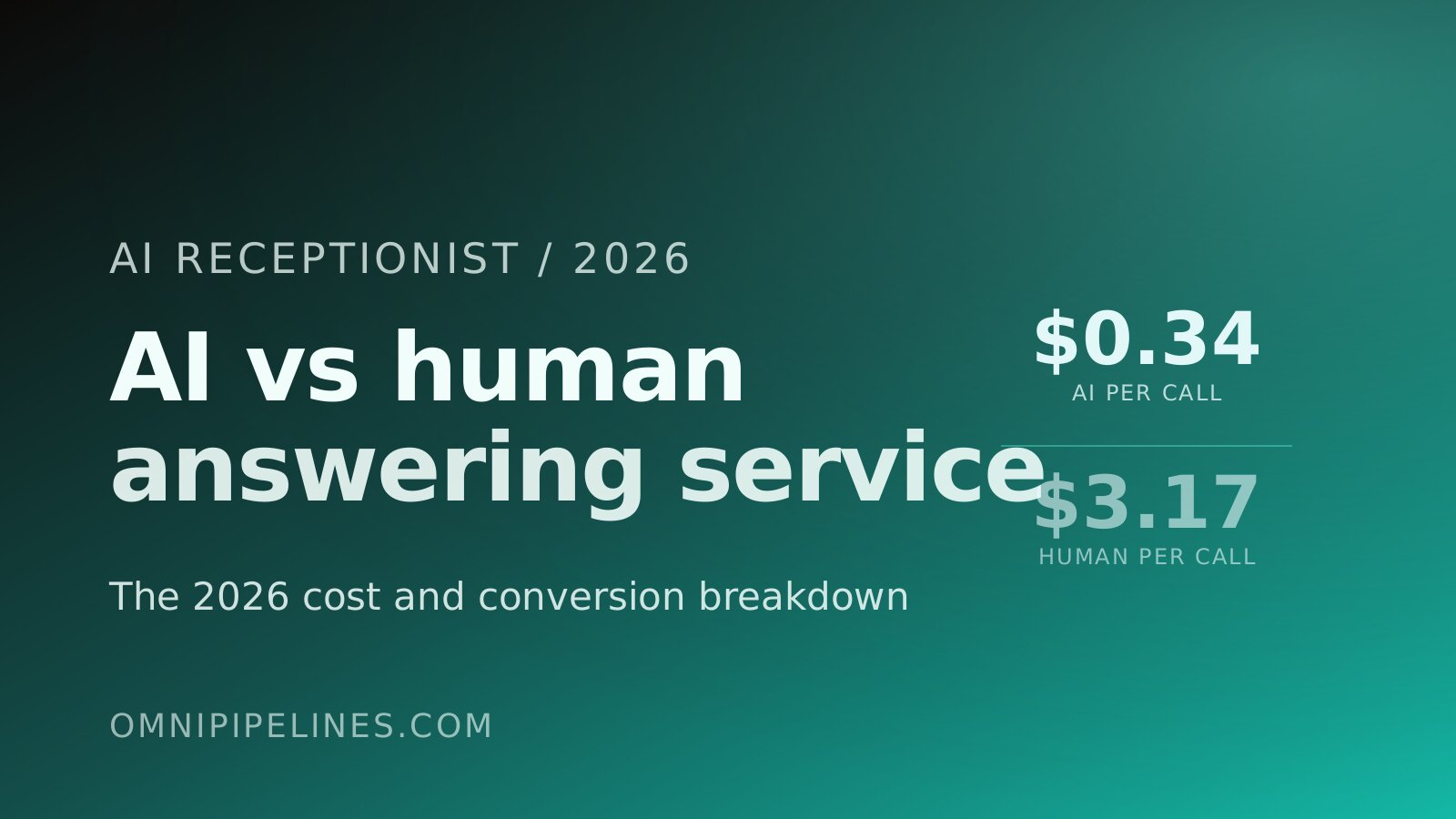
That client was averaging 410 inbound minutes per month across 230 calls. Monthly bill ran roughly $730. Cost per answered call: about $3.17. Appointment conversion from answered call to booked service visit: 24%.
AI receptionist: real cost per answered call
Same client, same month, after we swapped in Voice AI on their all-in-one growth platform:
- Platform surcharge: no additional seat fee on their existing plan
- Voice AI minutes: 410 minutes at $0.19/min, roughly $78
- Carrier passthrough: already bundled in platform spend
- Fallback human cover (edge cases routed to the owner's cell): roughly $0, since the owner takes those calls anyway
- Setup, one-off: $0, included in our Never-Miss-a-Lead onboarding
Monthly bill: $78. Cost per answered call: about $0.34. Appointment conversion from answered call to booked service visit: 31%. The lift came from the booking link sending inside the same minute the call ended, not an hour later from a dispatcher queue.
Where human answering services still win
Three use cases where we still recommend a human service, either instead of AI or alongside it:
- Grief-adjacent industries: funeral directors, hospice, pet cremation, estate planning. Even best-in-class AI has a cold edge on these calls that a human service recovers from poorly on recordings.
- Complex insurance or claims intake: six to ten fields of structured data captured from a stressed caller. Humans handle the pacing better.
- Peak-season overflow for very low-volume businesses: a solo trades business taking 40 calls a month does not need the fixed platform cost of a Voice AI subscription. A pay-per-minute human service is cheaper under 60 answered calls.
Where AI wins flat out
- After-hours. AI costs the same at 2am as at 2pm. Human services bill a 25% to 40% premium overnight.
- Bookings. AI reads a live calendar and books the slot inside the call. Human services take a message and the dispatcher calls back, losing roughly 18% of leads in the handoff.
- Repeatability. AI greets the 400th caller with the same energy as the first. Humans do not.
- Volume spikes. A storm rolls through a service area and a plumber takes 90 calls in two hours. AI handles it; a 2-seat human service does not.
The hybrid pattern we ship most often
The default stack for a home-services or clinic client in late 2026:
- AI answers all inbound calls, routed via a published business number.
- AI qualifies the caller in 2 to 4 questions and books the right service type to the right calendar.
- If the caller asks for a human, says 'speak to the owner', or trips a sensitive-topic keyword, the call warm-transfers to the owner's cell during business hours or routes to a human answering service after hours.
- A missed-call text-back fires at 60 seconds in the unlikely event that the AI itself is unreachable (platform outage, number mis-provisioning).
Our AI Receptionist and Chat service includes voice setup, calendar wiring, after-hours routing and the fallback stack above. We also audit your current answering-service bill and show the delta before any migration. Book a free growth audit if you want the numbers run on your real call volume.